China's Next-Generation Industrial Policy and the Reshaping of Metropolitan Economies
An analysis of how China's expanding industrial strategy is influencing urban development, infrastructure investment, and metropolitan competitiveness across the globe.
Executive Summary
China's next-generation industrial policy is becoming more systemic, extending across mature industries, upstream supply chain nodes, and frontier technologies. This strategic evolution is accelerating China's trade dominance and deepening global dependencies on Chinese supply chains. For metropolitan economies, these dynamics translate into shifting investment patterns, new infrastructure demands, and altered competitive positions. This article examines the urban implications of China's industrial strategy, from the concentration of innovation districts to the modernization of logistics and digital infrastructure.
Introduction
A decade after the launch of Made in China 2025, Beijing is doubling down on state intervention rather than retreating. The latest wave of industrial policy touches nearly every major economic sector, from critical minerals and chemicals to artificial intelligence and quantum computing. The scope and scale of these interventions are unprecedented, and their effects are increasingly visible in cities—both in China and abroad. As the global economy adapts to this new phase of state-driven industrial transformation, urban leaders must understand how these forces shape metropolitan development, infrastructure priorities, and economic resilience.
Urban Context
Cities have always been the primary engines of industrial innovation and economic growth. In China, industrial policy has long been intertwined with urban planning, from the creation of special economic zones to the development of high-tech parks. The next-generation policy extends this relationship, channeling resources into strategic sectors that are often anchored in specific metropolitan regions. For example, electric vehicle and battery production has clustered in cities like Shenzhen, Shanghai, and Hefei, creating innovation ecosystems that attract talent, investment, and supporting industries. Similarly, artificial intelligence initiatives are concentrated in technology hubs such as Beijing, Hangzhou, and Shenzhen, where research institutions and startups benefit from state-backed demand and procurement.
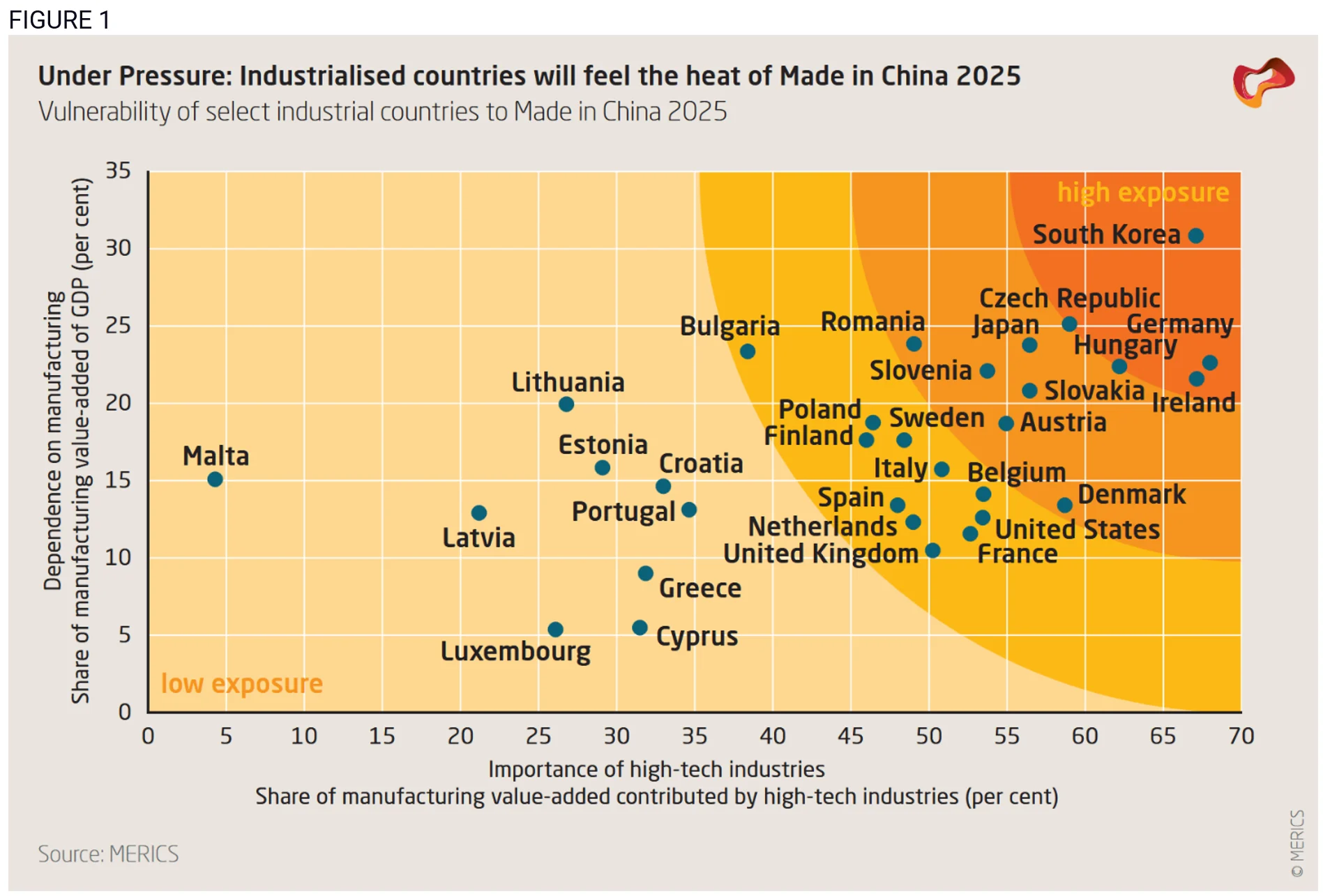
Beyond China, the global impact of these policies is reshaping urban economies in other countries. Rising import competition in manufacturing affects industrial cities in Europe and North America, while increased demand for Chinese inputs and capital goods creates new dependencies in urban supply chains. The acceleration of "China Shock 2.0"—with manufacturing trade surplus roughly doubling to around $2 trillion since 2019—places pressure on cities that rely on exporting advanced industrial goods to adapt quickly or face economic disruption.
Main Analysis
China's industrial strategy now spans all layers of production, from upstream inputs such as critical minerals, wafers, and magnets to downstream applications and services. This breadth distinguishes it from earlier policies that focused on a defined set of strategic emerging industries. The result is an "industrial policy of everything" that affects sectors as diverse as chemicals, machinery, construction, and digital services. For metropolitan economies, this means that policy-induced supply and demand shifts can no longer be treated as isolated events; they are systemic forces that shape the competitiveness of entire regions.
A key element of the evolving playbook is the mobilization of financial resources through recentralization and tighter coordination. Authorities are strengthening control over fiscal spending, bank lending, and state investment funds to ensure that scarce capital is directed toward strategic priorities. Government guidance funds are being consolidated, and bank lending is steered through targeted relending facilities. This approach inevitably influences urban infrastructure financing, as large-scale projects align with national industrial objectives. Cities that can align themselves with these priorities—for instance, by developing clean energy or digital infrastructure—may attract more central government support, while others face tighter credit constraints.
The policy shift also emphasizes the adoption of new technologies through public procurement and state-owned enterprises. Rather than simply funding R&D, the state is generating demand for frontier technologies such as AI, quantum computing, and future energy systems. In practice, this accelerates the deployment of smart city technologies, intelligent transportation systems, and digital governance platforms in Chinese cities. It also creates opportunities for global cities to collaborate with Chinese firms on technology adoption, though it raises questions about data security and geopolitical alignment.
Metropolitan Impact
The implications for metropolitan regions are multifaceted. First, on the economic front, the expansion of China's manufacturing surplus is intensifying competition for urban export sectors. Cities that specialize in solar panels, semiconductors, or heavy machinery now face a more assertive Chinese industry. Meanwhile, the deepening dependency on Chinese supply chains—products where China accounts for more than 50% of global exports have nearly doubled in number—means that urban infrastructure projects dealing with energy, transport, and construction must hedge against supply chain vulnerabilities.
Second, infrastructure investment patterns are shifting. In China, state-led industrial policy is driving the modernization of logistics networks, ports, and rail systems to facilitate trade and support global expansion. This includes the development of smart warehouses, automated ports, and integrated digital platforms. Elsewhere, cities are responding by investing in their own infrastructure to maintain competitiveness, often through public-private partnerships and innovative financing tools.
Third, the acceleration of technology adoption is reshaping urban services. Chinese firms, supported by state demand creation, are pioneering applications in areas like urban AI, autonomous mobility, and digital infrastructure. As these technologies mature, cities around the world will need to assess their integration potential, from traffic management to public safety, while balancing regulatory and security considerations.
Fourth, housing and commercial real estate markets are not immune. Industrial policy influences where jobs are created, which in turn drives demand for residential and office space. In China, cities designated as innovation hubs are experiencing concentrated growth in technology employment, putting upward pressure on property prices and rents. Globally, the reshoring of critical supply chains could revitalize some industrial regions, but the pace of change remains uncertain.
Strategic Insights
For urban planners and policymakers, the key insight is that China's industrial policy is now a structural factor in global urban development. Strategic responses should include:
- Diversification: Cities dependent on industries facing Chinese competition must accelerate economic diversification into services, advanced manufacturing niches, and innovation-driven sectors.
- Resilience: Supply chain resilience is critical for urban infrastructure. Cities should map dependencies on Chinese critical minerals, inputs, and capital goods and develop contingency plans.
- Innovation Ecosystems: As China's industrial policy concentrates on future technologies, cities globally should strengthen their own innovation ecosystems through targeted investment in R&D, education, and startup support, rather than relying solely on imported technology.
- Public-Private Partnerships: Given the scale of infrastructure investment required to compete and adapt, cities should explore new collaborative models that blend public goals with private capital and expertise.
- Governance and Data: The rise of urban AI and digital infrastructure demands robust governance frameworks to ensure privacy, security, and equity. Cities should proactively engage in international dialogues on standards and best practices.
Future Outlook
Over the next 5–15 years, China's industrial policy will likely continue to shape metropolitan trajectories. As the policy expands into future industries, cities that can align with these emerging value chains—whether in clean energy, biotechnology, or artificial intelligence—will gain competitive advantages. However, the centralized allocation of capital and maturing industrial base may also lead to reduced efficiency and slower productivity growth in the long term, tempering the pace of urban transformation.
Globally, we can expect intensified competition among metropolitan regions to attract investment in advanced manufacturing, research, and digital infrastructure. The shift toward multipolar supply chains will create new industrial clusters in Southeast Asia, Latin America, and South Asia, offering opportunities for cities that can position themselves as alternative hubs. Meanwhile, the imperative of climate adaptation will intersect with industrial policy, accelerating demand for green infrastructure and smart city solutions that are increasingly supplied by Chinese firms.
Ultimately, the future of metropolitan development is inseparable from the evolution of national industrial strategies. City leaders must engage with these global forces proactively, building adaptive capacities that enable long-term resilience and prosperity.
Conclusion
China's next-generation industrial policy is a defining feature of the 21st-century economic landscape. Its systemic and pervasive nature means that no city is entirely insulated from its effects. By understanding the urban dimension of this policy, stakeholders can better anticipate changes in infrastructure, employment, technology, and trade. The time to act is now—to diversify, to innovate, and to build the collaborative frameworks that will sustain metropolitan resilience in an era of transformative industrial competition.
Key Takeaways
- China's industrial policy has expanded from targeted sectors to virtually all layers of production, making it a systemic force in global urban development.
- The acceleration of China's trade dominance is reshaping supply chains and creating new dependencies that cities must manage.
- Urban infrastructure and technology adoption are directly influenced by state-driven industrial investment, offering both opportunities and challenges.
- Cities should prioritize economic diversification, supply chain resilience, and innovation ecosystem development to maintain competitiveness.
- Long-term urban planning must account for the evolving global industrial landscape and its implications for housing, mobility, and quality of life.
SEO Keywords
Smart City, Urban Development, Infrastructure, Metropolitan Economy, Artificial Intelligence, Urban Planning, Transportation, Public Transit, Digital Infrastructure, Real Estate, Climate Adaptation, Urban Innovation, Sustainability, Construction, Future Cities, Regional Development, Urban Governance, Economic Development, Mobility, Quality of Life.
Sources
This article is based on the report "China's Next-Generation Industrial Policy" published by Rhodium Group and commissioned by the U.S. Chamber of Commerce. The full report is available at: Rhodium Group Report